
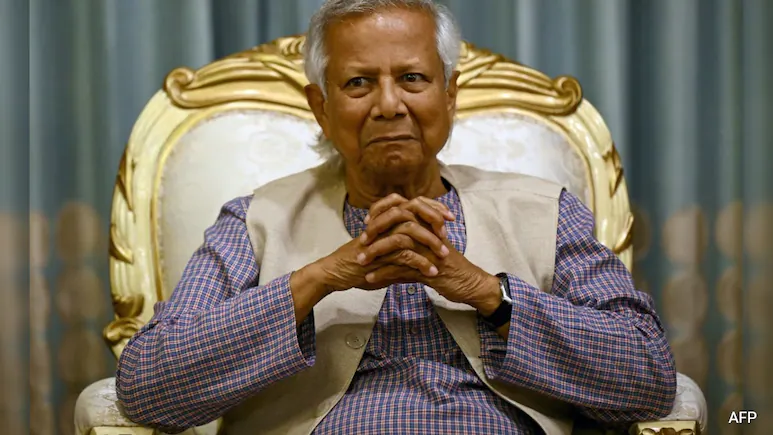
Bangladesh President Mohammed Shahabuddin has accused former interim chief adviser Muhammad Yunus of conspiring to remove him from office through unconstitutional means, days after a new administration led by Prime Minister Tarique Rahman took charge in Dhaka.
In an interview published by the Bengali-language daily Kaler Kantho, Shahabuddin said he faced repeated efforts over the past 18 months to destabilise the country and create what he described as a constitutional vacuum. He also claimed he was kept out of key state decisions during the interim period.
Yunus, a Nobel Peace Prize laureate, led the caretaker administration that governed during the transition following the 2024 political upheaval and ahead of elections that returned the Bangladesh Nationalist Party (BNP) to power.
Yunus conspiracy claim centres on alleged bid to replace the president
Shahabuddin said there were attempts to install a former chief justice in his place “through unconstitutional means,” but claimed a judge refused on constitutional grounds. He did not provide documents to support the allegation or name the individuals involved.
The president also described an episode on Oct. 22, 2024, when protesters gathered outside Bangabhaban, the presidential residence. He said the situation became a “terrifying night,” alleging a mob attempted to loot the premises before order was restored after military deployment.
President says interim government failed to brief him on key matters
Shahabuddin said Yunus did not maintain constitutionally required communication with the head of state while serving as chief adviser. He alleged he was not briefed on foreign trips, major decisions, or outcomes of overseas visits.
“He travelled abroad 14 to 15 times, but not once did he inform me,” Shahabuddin said in the interview, adding that he was not consulted on state matters and was left “completely in the dark.”
He also said two planned foreign visits by the president, to Kosovo and Qatar, were blocked during the interim period.
Questions over ordinances and an agreement with the United States
Shahabuddin said the interim administration issued 133 ordinances and argued that while some may have been necessary, there was no justification for such a large number.
He also said he had no knowledge of what he described as a final agreement concluded with the United States by the interim government ahead of elections, and that such state-level arrangements should have been formally communicated to the president.
Army and BNP support cited as new government settles in
The president credited the Bangladesh armed forces and BNP leadership with preserving constitutional continuity, saying service chiefs assured him of their support as the supreme commander.
Tarique Rahman was sworn in as prime minister after his party’s election victory, with Shahabuddin administering the oath of office. Bangladesh’s new government has not publicly responded to Shahabuddin’s allegations against Yunus, and Yunus has not issued an immediate comment on the claims.