
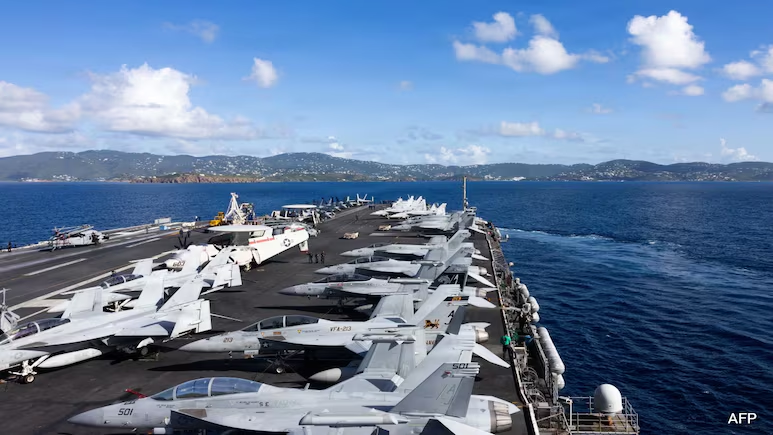
The United States is expanding its naval and air presence in the Middle East as President Donald Trump repeats warnings about possible military action against Iran. The buildup now includes two aircraft carriers in the wider region, a rare posture in recent years. However, on the USS Gerald R. Ford, daily life has become part of the story, with sailors dealing with repeated plumbing failures during an already extended deployment.
A major US buildup takes shape around Iran
US officials and reporting describe a sharp increase in American aircraft and warships positioned across Europe and the Middle East since mid-February. The Washington Post reported more than 150 US military aircraft moving into the theater, alongside reinforced carrier power at sea. The Pentagon has also briefed on risks tied to any large operation, including escalation and strain on resources.
At sea, the carrier USS Abraham Lincoln has operated in the area, with multiple destroyers and littoral combat ships also deployed. Reuters and other outlets have tracked additional ships entering the region since late January.
Why the USS Gerald R. Ford is central to the plan
The Ford is the US Navy’s newest carrier class and one of its most visible tools for surge operations. A carrier strike group brings a floating airfield, escorts, and logistics support. That package lets Washington project air power without relying only on regional bases.
On February 24, 2026, the USS Gerald R. Ford was photographed docked at Souda Bay on the Greek island of Crete, a key stop on its route toward the Middle East. Euronews reported the ship was en route to join the broader buildup as tensions with Tehran climbed.
An extended deployment that keeps stretching
The Ford left Naval Station Norfolk on June 24, 2025. In peacetime, a carrier deployment often runs about six months, according to retired US Navy leaders cited by the Wall Street Journal. The Ford’s time away has already passed that mark and could approach a record length if extensions continue.
The Wall Street Journal reported that the most recent extension has hit morale across the crew. Sailors and families described missed milestones and rising frustration as the timeline slipped again.
Toilets, sewage, and a system that keeps failing
Several reports have focused on the carrier’s plumbing, which uses a vacuum-based sewage system. A vacuum system moves waste by suction through narrow piping, which saves water but can amplify failures across a section when suction drops. Navy Times reported persistent problems and frequent clogs, an issue that has followed the ship for years.
Task & Purpose reported that documents obtained by NPR pointed to near-daily breakdowns during the ship’s Caribbean operations earlier this year. Navy Times also described how crews have had to respond repeatedly, even as maintenance windows shrink at sea.
The human cost for sailors in “ghost mode”
Operational security adds another strain. During sensitive movements, carriers can limit communications, a practice sailors often call “ghost mode.” It reduces tracking risk, but it also cuts off contact for long stretches. The Wall Street Journal reported that many sailors on board are in their early 20s and have struggled with repeated extensions and time away from family.
That pressure matters as the Navy asks crews to sustain readiness while the ship remains forward for longer than planned. The Ford still has to generate sorties, maintain aircraft, and support escorts, even as shipboard systems wear down.
How the Ford ended up here after Venezuela
The Ford’s route to the Middle East followed months in the Caribbean, where US operations escalated sharply in early January. Reuters reported that a US military action on January 3, 2026 captured Venezuelan leader Nicolás Maduro, triggering international condemnation and ongoing legal and diplomatic disputes. Other outlets have tied the Ford’s Caribbean posture to that period of operations.
With the ship now moving toward the Middle East, the Navy faces a familiar tradeoff: keep high-end forces forward for deterrence, or pull them home for recovery and repairs. For the USS Gerald R. Ford’s crew, the immediate reality remains more basic: staying mission-ready while living through a deployment that keeps getting longer