
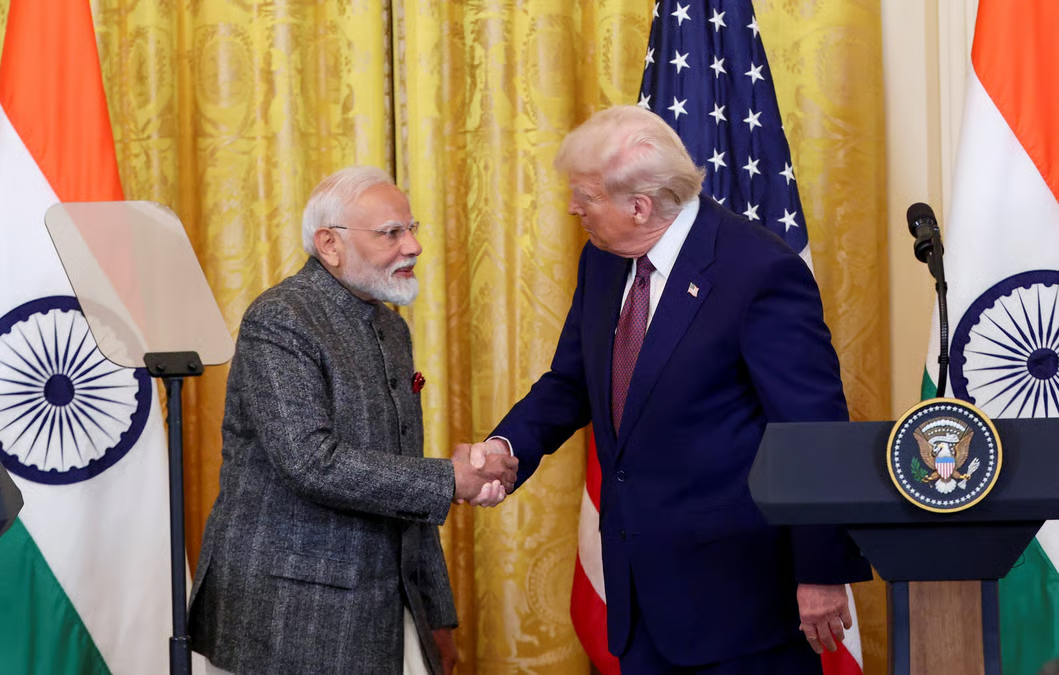
The US-India trade deal is still being shaped, even after the headline announcement. The Trump administration has quietly edited its official fact sheet, softening or removing several lines that had sparked pushback in India. The changes are small on paper, but big in meaning.
They suggest the final text is still under negotiation ahead of a signing expected around mid-March.
A quiet rewrite that changes the tone
The White House issued a fact sheet outlining what it called a historic trade framework. Within about 24 hours, it published a revised version.
That update matters because the first document went beyond the language in the US-India joint statement. It created confusion in India, and gave critics fresh targets. The revisions now pull key claims closer to what both sides publicly agreed.
Pulses disappear from the agriculture list
One of the clearest edits concerns agricultural market access. The earlier fact sheet listed “certain pulses” among products for which India would eliminate or reduce tariffs.
The revised fact sheet drops pulses from that list.
This is not a minor detail in Indian politics. Pulses are sensitive for farmers and a recurring flashpoint in trade talks. Removing the reference reduces immediate pressure on New Delhi, at least in public messaging.
One word softens the $500 billion line
The second change is a single word, but it reshapes expectations.
The earlier version said India was “committed” to buying over $500 billion of US goods and services in five years. The revised version replaces “committed” with “intend”.
That shift moves the statement from a binding-sounding pledge to a softer political signal. It also lowers the risk of India being accused at home of signing up to an impossible import target.
In the same area, the revised language also removes an explicit mention of “agricultural goods” from the purchase list, which further cools farm-sector alarm.
Digital services tax language is toned down
A third edit concerns digital taxation.
The first fact sheet suggested India would “remove” its digital services tax. The revised version no longer says that. Instead, it frames the discussion as negotiations on digital trade rules and practices.
A digital services tax is a levy applied to revenues earned by large foreign tech firms from local users, even without a physical office in the country.
By stepping back from a clear-cut “remove” claim, the White House reduces another potential political fight for India’s government.
What the edits indicate about the negotiations
These revisions point to something simple. The deal is not fully locked.
They also suggest India pushed back through channels that do not show up in public statements. The updated fact sheet looks like an attempt to remove irritants before the next stage, when the interim agreement is expected to be finalised.
In trade diplomacy, wording is policy. When language is revised this quickly, it usually signals unresolved issues.
The big unresolved question still hanging over the deal
Even after the edits, one politically sensitive issue remains central: Russia-linked oil.
The broader trade framework has been tied to US expectations on India’s oil purchases, and the way Washington describes monitoring and enforcement has drawn scrutiny. How this is framed in final documents will shape the reaction in India, and the durability of the agreement.
For now, the message from Washington is mixed. The fact sheet is being softened. But the core bargaining remains active as both sides move toward a mid-March signing.