
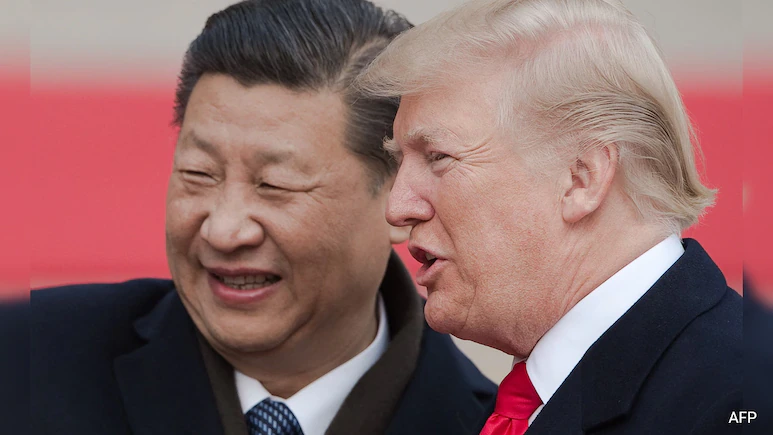
US President Donald Trump has asked to delay his planned summit with Chinese leader Xi Jinping. He said he needs to stay in Washington to oversee military operations as the war with Iran enters its third week.
The meeting, expected later in March, was seen as a high-stakes attempt to steady US-China ties after months of friction. Now, the delay risks adding fresh uncertainty to a relationship that was only recently stabilised.
Why Beijing may welcome a postponement
For China’s leadership, the postponement may be less a setback than a chance to reset. Officials in Beijing had been uneasy about the short preparation window for a summit of this scale.
A delay also reduces the risk of awkward moments. The Iran war is rapidly shifting energy markets and regional alliances. That makes headline diplomacy harder to control.
Xi has also kept a notably low public profile on the conflict so far. That silence has fuelled speculation about how Beijing is weighing the fallout.
Hormuz pressure adds a new layer
Trump earlier linked the timing of the visit to China’s willingness to help secure the Strait of Hormuz. The strait is a narrow waterway linking the Persian Gulf to global shipping routes. It is vital for oil and gas flows.
Iran has threatened and disrupted traffic through the strait. That has raised fears of higher energy prices and shipping delays.
China has large economic interests across the Gulf. But it also has ties with Saudi Arabia, the UAE, and other regional states. That balance makes any security role politically sensitive.
Officials say talks continue behind the scenes
Beijing has not publicly announced dates for the visit. That is consistent with its usual approach to leader travel, often confirmed close to departure.
When asked about reports of a postponement, China’s foreign ministry said both sides are maintaining communication on timing.
In Washington, officials have also signalled that planning is still underway, even if the schedule slips.
Trade truce still hangs over the calendar
A key item on the agenda is a one-year trade pact reached in October after months of tariff disputes. That deal was meant to calm markets and curb further escalation.
US Treasury Secretary Scott Bessent has described recent trade talks with Chinese negotiators in Paris as “really good,” and said any summit delay would be due to logistics.
Even so, a postponed summit interrupts the momentum of a planned series of top-level meetings this year. That raises questions about whether the US president can travel while the Middle East conflict continues.
What a delay could mean for both sides
A short delay may give negotiators more time to prepare deliverables. That can reduce the risk of a summit that produces headlines but few agreements.
However, it also highlights how quickly external crises can derail diplomacy. And it puts added pressure on lower-level talks to keep the relationship steady.
Trump’s request to postpone the Xi meeting may buy time for both capitals. Yet it also underlines the fragility of the current truce, as the Iran war forces US-China ties to compete with events neither side can fully control.