
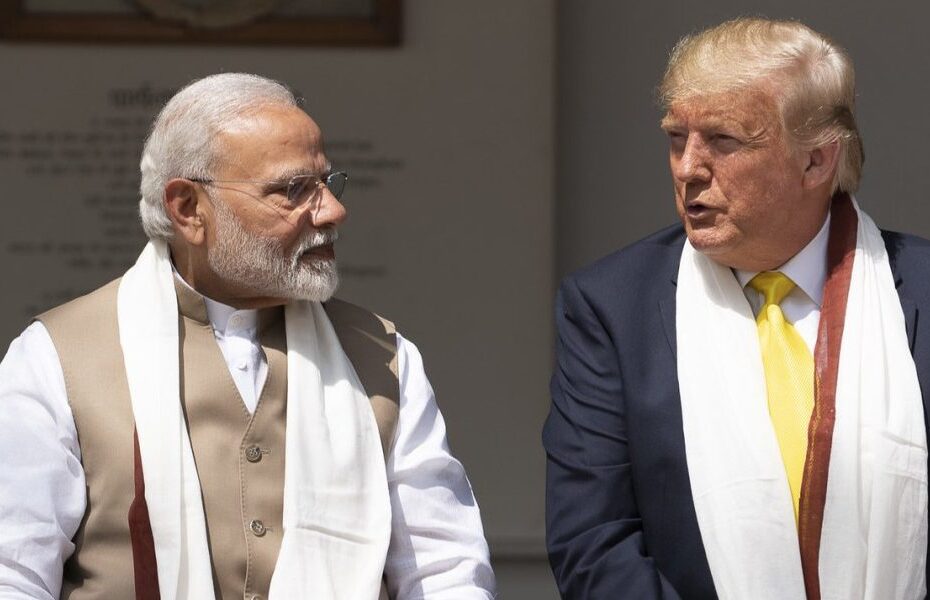
The United States and India have taken an official first step towards a bilateral trade deal. A joint statement sets the ground rules for negotiations on tariffs, market access, standards and procurement. The big shift is the method. This framework leans less on market forces, and more on negotiated commitments.
What the Joint Statement changes in practice
For decades, trade liberalisation followed a familiar script. Governments reduced import duties and opened markets. Then prices and demand did the rest.
This new framework departs from that logic. It outlines when tariffs could be cut, discusses regulatory alignment, and includes explicit targets on volumes and purchases. The key question is not only whether trade will grow. It is whether India is accepting binding commitments that reduce its room to change policy later.
India’s tariff cuts come first
Under the outline described, India would eliminate or sharply reduce tariffs on US industrial goods and a broad set of agricultural products. The emphasis is on speed and scope.
On the US side, the picture is different. The framework described applies an 18% reciprocal tariff on several Indian export categories, including textiles, leather, footwear and selected machinery. It does not commit to removing those tariffs now. Any relief is framed as conditional on future negotiations.
In some areas, India is described as accepting tariff-rate quotas. That is a system where lower tariffs apply up to a fixed volume. Beyond that threshold, higher duties return.
Why the deal could skew who captures value
Trade outcomes are not only about how much is traded. They also depend on who captures the higher-margin parts of supply chains.
If high-tech, capital-intensive imports enter India with little tariff friction while labour-intensive exports face tariff barriers or quantitative ceilings, gains can tilt. In this reading, the advantage shifts towards sectors with embedded technology and intellectual property.
Over time, that can shape investment decisions inside India. Capital may flow towards assembly and downstream integration. Upstream capability building can become harder if the policy tools used to nurture industry are constrained.
Mandated purchases introduce rigidity
A major feature described is a five-year commitment to purchase USD 500 billion of US energy, aircraft and technology goods. This is a structural change.
In a price-responsive system, import volumes move with growth cycles and price shifts. Slowdowns compress imports. Spikes in commodity prices change sourcing.
A fixed multi-year purchase target reduces that flexibility. Imports become anchored to negotiated numbers rather than domestic demand conditions. The text notes that India currently imports over USD 45 billion a year from the US. Reaching USD 500 billion over five years implies a sharp annual step-up.
That matters for external stability. If export growth or capital inflows do not rise in parallel, financing guaranteed imports could pressure reserves or increase external liabilities. It can also narrow monetary and exchange-rate policy space over time.
India US trade deal could divert trade and reshape supply chains
Mandated energy purchases highlight trade diversion. If required imports displace cheaper suppliers, the economy absorbs higher input costs. Energy prices ripple through transport, manufacturing margins and inflation.
In agriculture, the framework described opens access for items such as dried distillers’ grains, sorghum for animal feed, soybean oil, tree nuts and horticultural products. The concern raised is upstream dependency. Domestic sectors may face tougher competition on inputs and intermediates, even if some finished goods retain protections.
In manufacturing, near-zero industrial tariffs can restrict the calibrated use of protection that late industrialisers have often used. If tariffs are largely off the table, upgrades must come through productivity gains, logistics and infrastructure.
Standards and regulation are part of the bargain
The framework extends beyond goods. It covers regulation, medical devices, licensing constraints for information and communication technology goods, and decisions on whether US-developed or international standards can be accepted.
Standards are not only technical rules. They also determine who sets the benchmark for market entry. When external standards become default references, some authority shifts outward.
In healthcare, the text flags possible tensions with price controls on devices such as cardiac stents and knee implants. Changes here can affect costs in a system where out-of-pocket spending remains significant.
In the digital economy, the framework links trade commitments with incentives for infrastructure such as data centres, and with expanded imports of advanced hardware. The risk highlighted is dependence on external ecosystems for core equipment and intellectual property, while domestic roles concentrate on deployment and services.
The joint statement signals a turn towards fixed tariffs, quotas, mandated purchases and aligned regulation. That may strengthen strategic ties and offer clarity to investors. However, it can also narrow policy flexibility. The real balance will depend on how the negotiations translate into enforceable terms.