
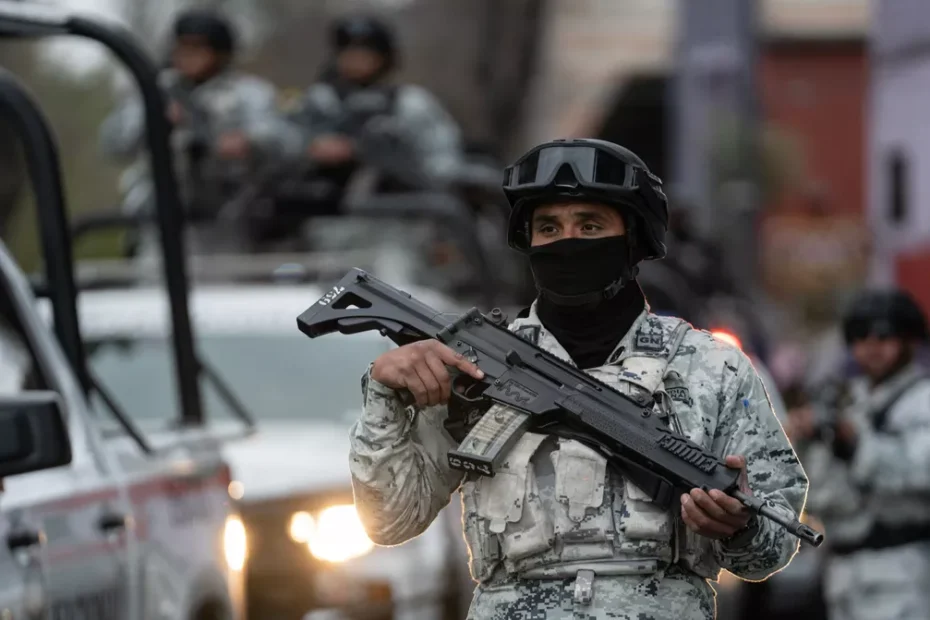
Mexican authorities said Nemesio Rubén Oseguera Cervantes, the fugitive leader of the Jalisco New Generation Cartel (CJNG) known as “El Mencho,” died after being wounded in a military operation in the southern state of Jalisco, setting off coordinated retaliatory attacks and road blockades across large parts of the country.
Mexico’s Defense Department said the operation aimed to capture Oseguera, whom Mexican and U.S. agencies had long described as one of the world’s most wanted drug traffickers. Officials said he was among several suspects wounded in the assault and later died during an air transfer to Mexico City.
El Mencho killed during operation near Tapalpa, officials say
The Defense Department said special forces units backed by air assets moved on a suspected CJNG stronghold in a mountainous area near Tapalpa, Jalisco, at first light. Authorities said cartel gunmen opened fire in an attempt to repel the raid.
In a statement, the department said four suspected cartel members were killed at the scene and three others later died during evacuation, including Oseguera. It said three soldiers were injured and two suspects were detained.
Officials said forces seized high-powered weapons, including rocket launchers capable of striking armored vehicles and aircraft.
Retaliatory attacks spread across Mexico
Within hours of the operation, authorities reported widespread violence in multiple states, including burning vehicles used to block highways, attacks on public and private property and shootouts in several cities.
Mexico’s government said roadblocks were reported at hundreds of locations, disrupting travel and prompting school closures in some areas. Residents in parts of Guadalajara and other urban centers were urged by local authorities to stay indoors as smoke rose from torched vehicles and fires.
Some transport services were suspended and security forces were placed on heightened alert as federal and state authorities moved to reopen key routes.
U.S. intelligence support and pressure on cartel enforcement
Mexican officials acknowledged cooperation with U.S. authorities in the intelligence effort that helped locate Oseguera. The U.S. government had offered a reward for information leading to his capture and had pushed Mexico to show stronger results against major trafficking groups.
Mexico’s President Claudia Sheinbaum praised the armed forces and urged calm, while emphasizing that Mexico’s security operations would be carried out under national command.
The U.S. State Department issued security guidance for American citizens in affected areas and urged heightened caution due to the unrest.
What the killing means for CJNG and Mexico’s security outlook
CJNG has expanded over the past decade into one of Mexico’s most powerful criminal organizations, trafficking fentanyl, methamphetamine and cocaine and known for deploying military-style weaponry and tactics.
Security analysts and Mexican officials have long warned that the removal of a cartel leader does not automatically dismantle an organization and can trigger internal succession fights or short-term surges in violence.
Authorities said additional deployments were being sent to Jalisco and neighboring regions as investigations continued, while federal forces worked to dismantle remaining armed cells and restore transport links across affected states.