
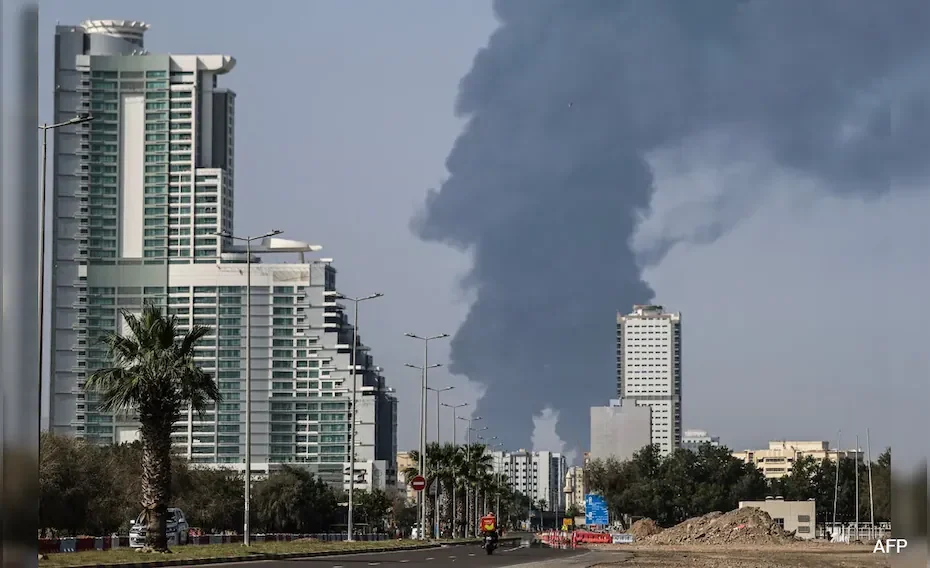
The recent Iranian strike campaign against the United Arab Emirates has often been reduced to dramatic images of drones hitting buildings. But a new picture emerges when you follow the daily interception updates.
An NDTV opinion analysis, based on compiled timelines drawn from the UAE Ministry of Defence’s daily releases, says Iranian forces launched nearly 1,800 drones and missiles towards the UAE starting on February 28. The author argues the pattern looks structured, with pressure and cost-imposition as the central goal, rather than mass infrastructure destruction.
Iran drone swarm seen as pressure, not pure damage
According to the analysis, the dataset points to a campaign designed to stress a modern, layered air-defence network. The idea is simple. Cheap drones can force an expensive response.
The piece argues that even when most incoming threats are intercepted, the defender still pays a high operational and financial price to keep the system running at peak readiness.
Three phases stand out in the interception timeline
The NDTV analysis divides the campaign into three broad phases.
First came what it calls a shock saturation opening on February 28 and March 1, when incoming volumes were at their highest. The early waves included a large ballistic missile component, which the author interprets as a way to force the UAE to reveal defensive responses.
Then came a sustained drone-heavy period from March 2 to March 8. Daily totals stabilised at roughly 120 to 160 incoming threats, with drones forming the bulk of the attacks.
Finally, the analysis notes a sudden drop in overall attack intensity beginning March 9, with markedly lower daily totals than the previous week.
Why cheap drones create an expensive defence problem
A key argument in the NDTV piece is economic asymmetry.
It cites estimates that Shahed-type drones can cost tens of thousands of dollars per unit, while interceptor missiles can cost millions. Patriot is a US-made air-defence system used to target aircraft and missiles. THAAD is a US-made system designed to intercept ballistic missiles at high altitude.
Using those cost ranges, the analysis claims the UAE’s defensive response over the campaign may have cost far more than the attacking side’s drone and missile production bill, potentially by multiples rather than margins.
High interception rates but some penetrations
The analysis says interception rates stayed high across most days, often in the 95% to 99% range, based on the compiled data. It also states that around 60 projectiles penetrated and struck UAE territory or nearby areas during the window it reviewed.
It highlights a notable signal on March 9 and March 10, when the reported interception rate dipped to roughly 88%, even though attack volumes also fell sharply. The author suggests this may reflect a shift toward smaller “probing” attacks, designed to test air-defence coverage and identify weaker points.
Aviation disruption became part of the impact
Even with strong defensive performance, the analysis argues the campaign still produced measurable disruption.
It points to reduced flight activity at Dubai International Airport during the peak period, as well as disruptions at other major hubs including Abu Dhabi. The broader point is that airspace restrictions and diversions can impose economic and logistical costs even when most threats are intercepted.
A campaign built around signalling and attrition
The NDTV author’s bottom line is that the strike pattern looks like coercive signalling backed by economic attrition.
In this reading, Iran demonstrated reach, forced sustained air-defence activation, and tested the resilience of missile-defence networks. For the UAE and partners, the lesson is that advanced defences can be highly effective, but still vulnerable to being financially and operationally stressed by large volumes of low-cost unmanned systems.