
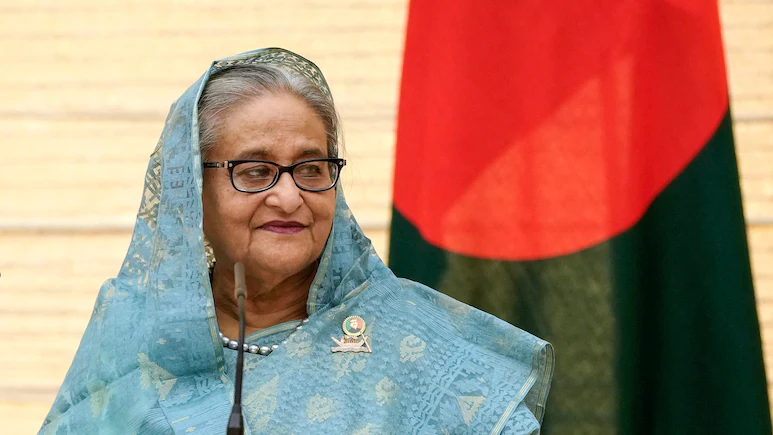
Sheikh Hasina has rejected Bangladesh’s latest election and wants it cancelled. In her first statement after the polls, the ousted prime minister called the vote “voterless, illegal and unconstitutional”. The election was the first since the 2024 mass protests that ended her rule.
Hasina rejects the process and the result
Hasina described the election as “deceptive”. She said officials held it without her party, the Awami League. She also claimed voters stayed away in large numbers.
She demanded the resignation of interim government chief Muhammad Yunus. She also asked authorities to drop what she called false cases. In addition, she called for the release of political prisoners.
Hasina went further. She demanded the lifting of restrictions on Awami League activities. She also asked for a new election under a neutral caretaker government.
Turnout claims fuel the dispute
Hasina said polling stations in Dhaka and other areas stood “completely empty”. She cited an Election Commission briefing. It put turnout at 14.96% by 11 a.m.
She argued that low participation showed a public boycott. She linked that boycott to the Awami League’s absence from the ballot.
Serious allegations about election-day conduct
Hasina accused the interim administration of ignoring voting rights and democratic norms. She claimed violence and coercion marked the process. She alleged gunfire, vote buying and ballot-stamping.
She also claimed attackers and officials targeted Awami League supporters. She said intimidation created fear in several areas. She added that minority communities also faced pressure.
Questions raised over voter lists
Hasina said voter rolls rose unusually, especially in Dhaka. She called the increase “questionable and unbelievable”. She did not provide detailed figures beyond that claim.
A high-stakes vote after the 2024 upheaval
Bangladesh held the vote after months of political shock. The 2024 protests forced Hasina from office. Many observers described those protests as a Gen Z-led movement.
Hasina left the country and now lives in India in exile. The Awami League did not take part in the polls, according to the account in her statement.
The opposition eyes power
Tarique Rahman of the Bangladesh Nationalist Party stands among the leading contenders to form the next government. He is the son of former prime minister Khaleda Zia. He returned to Bangladesh in December after 17 years in London.
Rahman has promised political reforms. He has also pledged to restore the rule of law. He says he wants to revive the struggling economy.
Hasina’s statement now adds new pressure on the post-election period. The country faces a sharp legitimacy fight. Political tensions look set to stay high in the days ahead.