
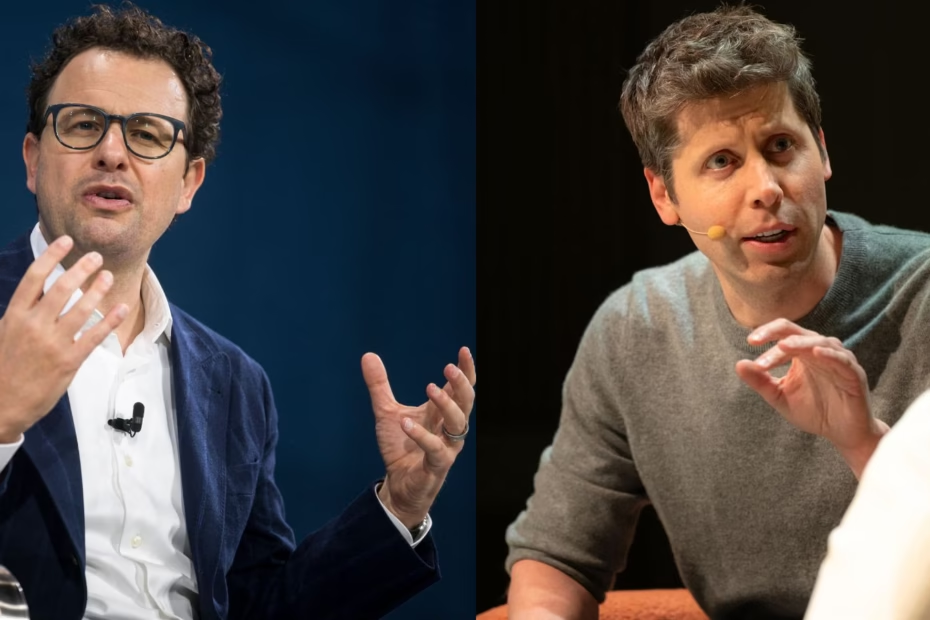
Anthropic has pledged that its Claude chatbot will remain free of advertising, a stance that has intensified a public exchange with OpenAI after Anthropic aired a television ad that appeared to parody ChatGPT’s move toward in-chat advertising.
In a blog post dated February 4, Anthropic said users will not see sponsored links next to Claude conversations and that Claude’s responses will not be shaped by advertisers or include undisclosed product placements. The company said ads inside an AI conversation would conflict with its goal of building a tool for “work and deep thinking.”
OpenAI chief executive Sam Altman responded on X, calling Anthropic’s portrayal “dishonest” and accusing the company of misrepresenting how OpenAI intends to introduce advertising inside ChatGPT.
Claude ad-free promise and Anthropic’s rationale
Anthropic drew a distinction between ads alongside traditional search results and ads embedded within an assistant-style conversation. The company said chat interactions are open-ended and can involve users sharing more context than they typically would in a search query, increasing the risk of influence and misaligned incentives.
Anthropic also argued that advertising can push product teams toward optimising for engagement, even if ads are displayed separately from the assistant’s answers. It said that dynamic could create pressure that is difficult to reconcile with its stated principles and its recently published “Constitution,” which outlines how it aims to steer Claude’s behaviour.
OpenAI’s ad plans and safeguards
OpenAI has said it plans to begin testing ads for logged-in adults in the United States on its free and “Go” tiers, with ads displayed in clearly labelled placements that are separated from the assistant’s organic responses.
OpenAI has also said it will not share user conversations with advertisers and that ads will not influence ChatGPT’s answers. The company has said it will avoid showing ads in sensitive categories and will not serve ads to users under 18.
Altman said on X that OpenAI would not run ads in the way Anthropic’s commercial depicted, arguing that users would reject intrusive advertising formats.
Monetisation pressure across AI companies
The dispute comes as investors and market observers scrutinise the economics of large AI models, which require heavy spending on computing infrastructure and ongoing development. Questions about how leading AI companies will fund expanding capacity have sharpened attention on revenue models beyond subscriptions.
Anthropic said its business relies on enterprise contracts and paid subscriptions, with revenue reinvested into improving Claude. The company also said it is open to introducing lower-cost subscription tiers and regional pricing where demand supports it.
Altman, in his X posts, said OpenAI’s scale includes broad free access and criticised Anthropic as building products primarily for higher-paying users, highlighting a widening debate over how AI services should be funded as adoption grows.