
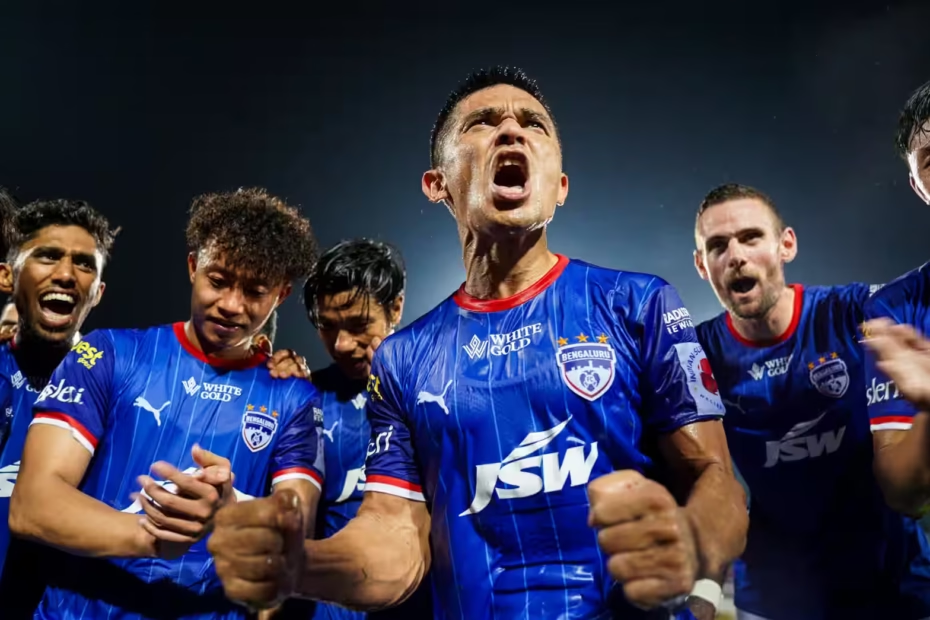
Bengaluru FC’s first-team squad has accepted salary reductions before a shortened Indian Super League campaign. Owner Parth Jindal praised the “sacrifice” and confirmed the decision followed frank talks with the dressing room leadership. The season is set to start on 14 February with fewer matches than usual.
What exactly changed—and why now
The club says the pay cuts reflect a smaller fixture list and tighter finances across Indian football. A truncated calendar compresses matchday income and squeezes sponsorship deliverables, while costs for travel, training and operations remain. Reports describe the 2025–26 ISL as a single-leg format, which reduces home dates and media inventory for clubs.
Sunil Chhetri and the leadership call
Veteran forward Sunil Chhetri supported the move, according to multiple reports. His backing helped align the squad and eased negotiations with younger players. The club framed the outcome as a bridge to stability rather than a long-term reset of wages.
League context: short season, open questions
The ISL has issued tentative fixtures, yet key structural details remain fluid. Several clubs have urged a pause on relegation for three to five years to protect investments during a financially stressed period. That uncertainty shapes contract talks, performance bonuses and academy promotion plans.
How Bengaluru FC got here
Bengaluru FC faced cash-flow strain last year during a league deadlock, even suspending first-team salaries before talks with the federation. The current pay-cut agreement marks a more orderly, negotiated step—one that keeps the squad intact for the restart.
What it means for the squad and the table
Shorter seasons amplify variance. Fewer games make injuries costlier and streaks more decisive. In this setting, wage flexibility can preserve depth: the club can retain rotation pieces rather than release them mid-window. But reduced bonuses may shift incentives toward minutes and appearance-based clauses. Expect heavier use of development players if travel is condensed and recovery windows shrink.
Contracts, compliance and fans: the practicalities
Players and agents will rework addenda that trigger on appearances, clean sheets and points. Clubs must document consent and ensure payments align with federation and labour rules. For fans, pricing and community events could matter more than ever as lost home dates limit live-gate opportunities. Sponsors will push for make-goods through digital inventory, player content and open-training access.
The road to kick-off
Bengaluru FC enters pre-season with clarity on costs and roles. League-wide answers on format and relegation will shape the rest: bonuses, broadcast add-ons and fixture congestion planning. If the calendar holds and revenues stabilize, the pay-cut trade-off buys time—keeping a competitive squad on the pitch while the ISL navigates a lean year.